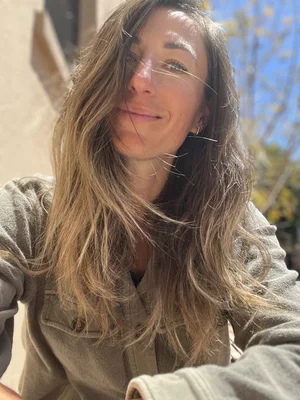
My FULL Rhinoplasty Journey: Buckle Up
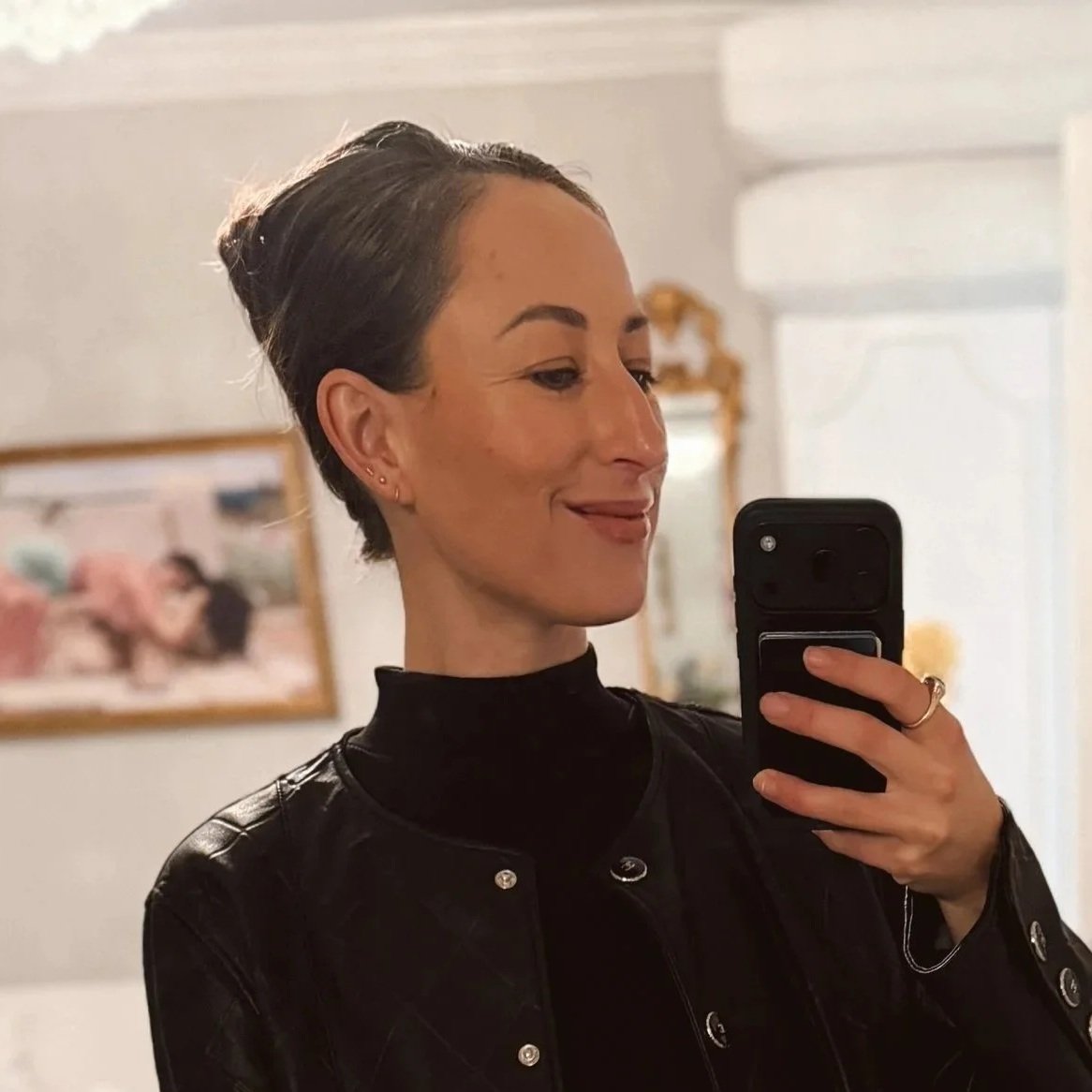
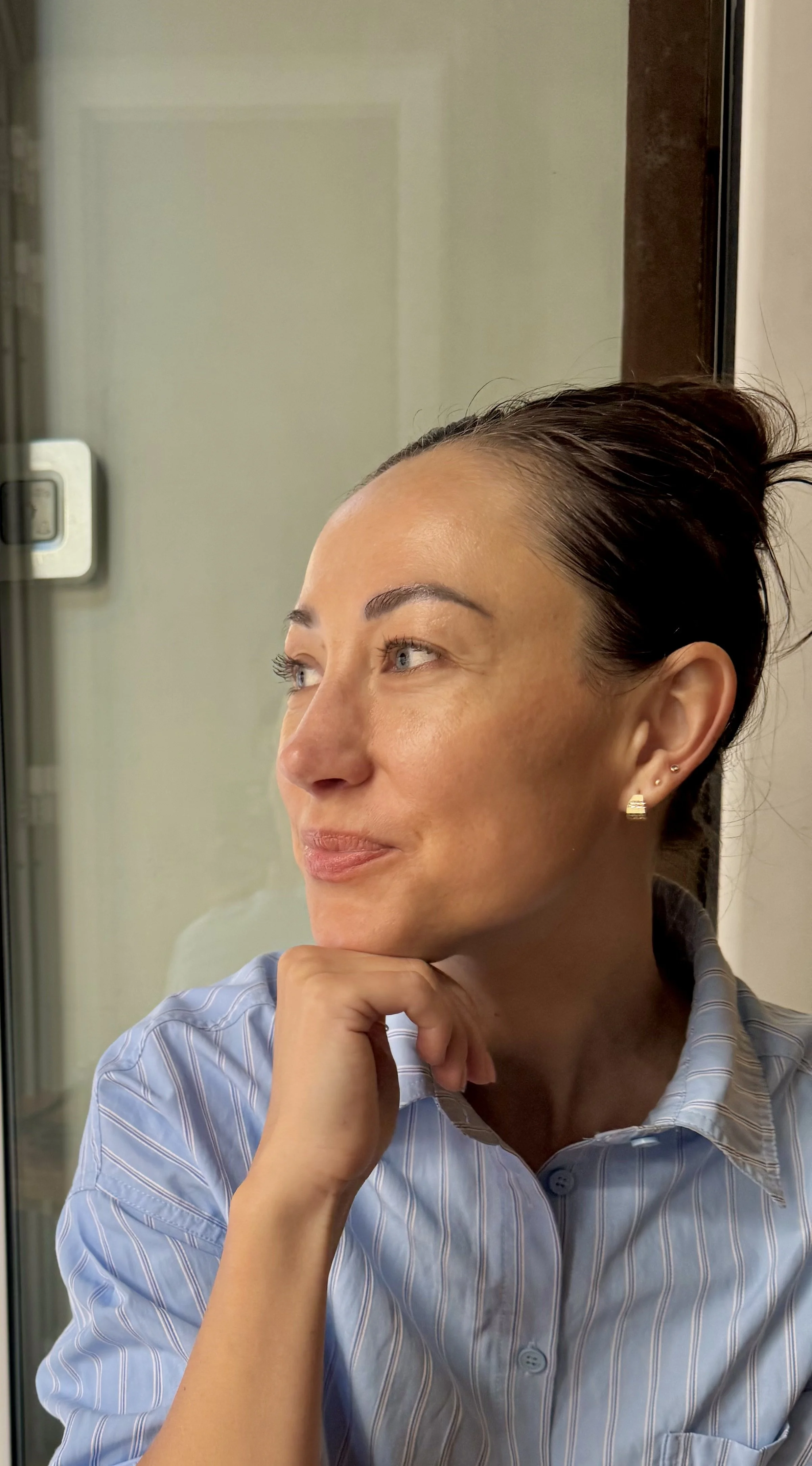
When I decided to get rhinoplasty after 19 years of thinking about it, I spent hours online looking for anyone who had documented the process from start to finish. I found endless before and after photos showing the physical change, but almost nothing about what it actually feels like to go through surgery and the emotional ups and downs of changing your appearance.
Nobody seemed willing to talk about how strange it is to let go of an identity you have carried for so long, or about the shock of seeing a different reflection in the mirror and wondering how long it will take to feel like yourself again. Plastic surgery comes with a heavy layer of shame, fear, judgment, and anxiety, and rhinoplasty can feel even more exposing because you are changing something that literally sits in the middle of your face.
That is why I started documenting my own experience. I had so many questions going through this process, so I wanted to cover the practical side of rhinoplasty along with my emotions in real time. Looking back, this was a very brave decision because I had no idea what I would feel or how others would react, but I’m so grateful I listened to my gut and decided to share publicly.
Once I started posting, I was so surprised by how many people reached out! Some had already had a procedure and still found it hard to talk about, and several told me the results changed their lives. I also heard from moms feeling nervous about their daughters having surgery, and from people in their 20s, 30s, 40s, 50s, and even 60s who had been thinking about it for years but were too scared to move forward for fear of judgement. Your messages (yes, yours!) showed me that this goes far deeper than cosmetic surgery…. it brings up how we see our worth and who we believe ourselves to be. Many of us feel a push and pull between accepting ourselves and wanting change, as if we have to pick one side. The truth is that we can love ourselves as we are and still want to change something on the outside. Things don’t always have to be black and white.
If this post helps even one person feel more informed or less alone, then it was worth writing.
And just so I’m clear upfront, there is ABSOLUTELY NO SHAME in making a choice that is right for YOU. I have no regrets.
Before we dive in, I’m excited to share that I’m officially launching 1:1 coaching for those of you preparing for rhinoplasty or navigating your own recovery. I know firsthand how isolating and overwhelming this process can feel, especially when you're trying to navigate the physical recovery alongside all the emotions that can come with changing your appearance. You deserve to feel informed, prepared ,and supported throughout the experience, and I want to help make that possible.
This is a brand-new offering, and I’ll have a dedicated webpage with more information coming soon. In the meantime, I’m offering individual sessions for those who need guidance with a specific part of their journey, as well as 6-week and 3-month coaching programs for those looking for more ongoing support. Depending on your needs, we can work together before surgery, throughout recovery, and as you adjust emotionally to your results. My goal is to be there for you throughout your journey, helping you feel less overwhelmed and more confident in navigating each stage.
If you're interested in learning more or want to talk about what kind of support might be right for you, please feel free to email me or send me a DM on Instagram. You don't have to navigate this alone ❤️
Thinking about rhinoplasty for almost 20 years
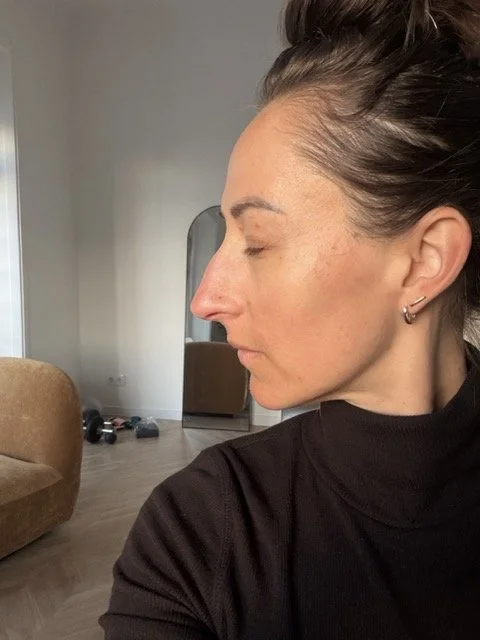
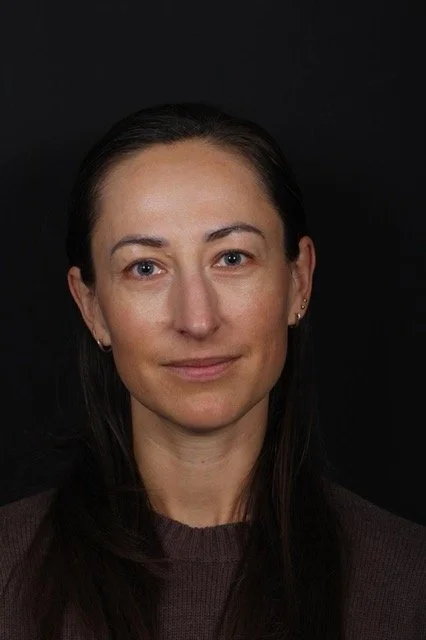
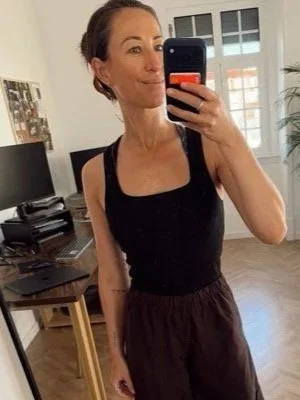
One of the reasons this experience felt so significant to me is because it was not a spontaneous decision. As I mentioned above, I had been thinking about rhinoplasty for almost twenty years before I finally booked the surgery. It wasn’t something I thought about every day and it certainly wasn’t something that prevented me from living my life. I traveled the world, built meaningful relationships, and created memories that had absolutely nothing to do with my nose. I loved (and love) myself for who I am, not how I look.
Yet every so often I would see a photo of myself from a certain angle or catch my reflection unexpectedly and the thought would return. I used to joke with my ex-boyfriend that if I ever got into a car accident and ended up in surgery, he should make sure someone fixed my bump while I was under.
I think that is what made the decision so complicated. The choice might have felt more straightforward if I had deeply hated my nose. Instead, I spent years living in the space between acceptance and desire. I didn’t feel consumed by insecurity, but I also couldn’t ignore the fact that this was something I continued to think about year after year.
As someone who has spent a tremendous amount of time doing inner work, that created its own set of questions. I have built my career around wellness and personal growth. I believe deeply that confidence is an inside job and that changing something externally does not automatically create happiness. For a long time I wondered whether wanting rhinoplasty somehow contradicted those beliefs. The older I have gotten, the more I have realized that life rarely fits into those kinds of black and white narratives.
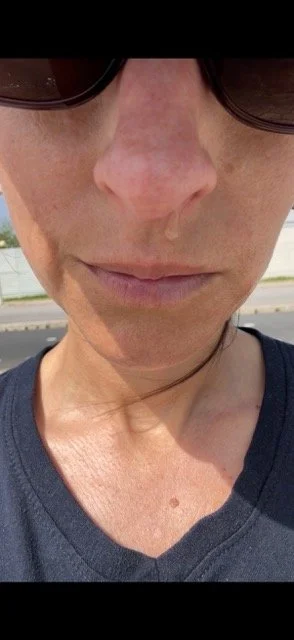
At age 34 my partner and I moved to Salt Lake City, which sits at about 1,288 meters (4,226 feet) and suddenly I developed a couple of real issues. I was constantly out of breath and out of nowhere I started having insane nasal drip. My nose would run at all times of the day and year… I could be inside speaking to someone when all of a sudden snot would come out of my nose. It was wildly embarrassing, and in a post Covid world where everyone stares at you like you’re diseased if you so much as sniffle, it felt even worse. It also presented a real problem because I love moving my body and was constantly outdoors hiking. I didn’t want to wipe my nose every time I was in a downward dog and I was really sick of wearing a handkerchief around my neck everywhere I went.
I decided to see an ear, nose, and throat specialist, and it turned out I had a deviated septum and an air pocket in my nose… basically a gap between my bones that could be causing the drip. My doctor said there was no way to say with absolute certainty that this was the reason, but his theory was that surgery would improve it.
For the first time, I had a practical reason to take rhinoplasty seriously and it forced me to look honestly at a desire I had spent years thinking about. I realized that one of the reasons I never did the surgery was a fear of shame around changing myself and the judgment that would come with it, but when I looked deep inside, I actually did want surgery. I had multiple reasons, including the practicality of not being able to breathe and the constant drip, and the fact that I didn’t love my nose. Going back to the woo woo, I also had a deep intuitive feeling that my nose was connected to my dad and to a lineage I wanted to sever ties with. It was a physical, emotional, and spiritual decision for me. I also wanted to do it before I have kids (if we decide to have kids) and since I’m 37, I decided it was now or never.
There is a difference between making a decision because you believe it will finally make you worthy and making a decision because you have thoughtfully considered what you want and feel at peace with that choice. There is a difference between trying to escape yourself and choosing something that feels aligned for you. And there is a difference between changing your appearance to become someone else and making a choice that allows you to feel more like yourself.
In that moment the decision felt so right in my soul because I knew I was making it for me and no one else. I felt no shame or fear. It was a solid knowing that I wanted to proceed… and so I did.
Why I Ended Up Having Surgery in Istanbul
When I first started seriously looking into rhinoplasty, my plan was to have the procedure done in Salt Lake City where I was living at the time. Then in November of 2025, we suddenly had an opportunity to move to Lisbon (if you’re curious about our move you can read the full story here). Once we made the move in February 2026, I started looking for a surgeon in Lisbon. I found one, scheduled a consultation, and booked my surgery for early May 2026.
Then something unexpected happened.
I posted a trial reel sharing that I was planning to get rhinoplasty….and thanks to the algorithm gods, someone I had never met reached out to tell me about her negative experience with the surgeon I had initially booked. That conversation led to another conversation, which led to more research, and I decided not to move forward with the surgery in Lisbon.
You can find the instagram reel I posted about that experience here. Since options in Lisbon are limited, I started looking at other countries, and after hours and days and weeks of research I found myself learning everything I could about rhinoplasty in Istanbul.
The deeper I went down the rabbit hole, the more I realized how established medical tourism is in Turkiye, with nearly 1.4 million international patients receiving care there in 2025 (Daily Sabah). Many Istanbul clinics offer modern techniques like piezo ultrasonic bone shaping (this is what my surgeon used) for more precise results (Journal of Clinical Medicine, 2022), and private hospitals have modern facilities and advanced medical technology, with dedicated international patient teams that help coordinate appointments, translation, transfers, and aftercare.
Please note that with surgery anywhere, safety comes down to choosing an accredited hospital and a board certified surgeon (ISAPS) so please do your research!
The lovely woman who reached out to share her experience in Lisbon also told me about a surgeon in Istanbul she wished she had gone to: Dr. Ismail Kucuker.
I researched him alongside a ton of other surgeons, but I kept coming back to him. One thing I really loved was seeing how many patients he had worked with from all over the world. I watched his highlight reels featuring patients from Switzerland, Spain, Asia, Serbia, the UK, and beyond. What stood out to me was how different every nose looked and how well each one suited the person's face. That was incredibly important to me because I absolutely did not want a cookie-cutter "Barbie" nose. I wanted a surgeon who would listen to what I wanted while also understanding what would work best for my face.
I also reached out to several of his previous patients to ask about their experiences and whether they were happy with their results. I spoke to people at different stages of recovery, from six months post-op to one year and even five years later. Everyone I spoke to had very positive things to say about him, which gave me even more confidence in my decision.
Of course, I didn't base my decision on Instagram alone. I also researched his credentials and the hospital where my surgery would take place. After looking into everything and speaking with former patients, I felt confident in my decision to move forward.
You can find his Instagram here and his website here if you'd like to learn more.
Please note that it is completely normal in Turkiye to communicate with plastic surgery offices through WhatsApp. I personally loved it because I could ask ALL of my questions over chat and then have a written record of every answer to refer back to later. You mainly speak with the team, but Dr. Kucuker and I also sent a few quick video messages back and forth about my nose, and then I met him in person at his office for my in office consultation two days before surgery. I know it can sound a little sketchy at first, but my experience was fantastic. Some surgeons offer a Zoom consultation and others do not, so it is worth asking about this early if a video consultation matters to you. If you have any questions about this, drop your question in the comment section below.
My biggest piece of advice is to take your time choosing your surgeon. This decision will have the biggest impact on your results. Do your research, speak to previous patients, and make sure you feel 150% confident in the person you choose. Trust the research, trust your intuition, and never settle until you find the right surgeon for YOU.
I am also SO glad I posted publicly, because I truly would not have had this outcome if I had been too scared to talk about surgery out loud. I only found my surgeon because I decided there was no shame in making this decision and there was no shame in sharing my entire experience online. By the time I booked my surgery, I felt certain with my decision.
Costs + Logistics (Istanbul Specific)
Please note this is for surgery in Turkiye specifically, so skip this section if it doesn’t apply to you!
This is probably the question I get asked most often. The clinic asked me not to share exact prices because prices depend on your specific situation. The best thing to do is message the doctor’s office directly for a quote or shoot me a private DM. What I can say is that it is much more affordable in Turkiye than in places like LA, but you will pay higher costs for good surgeons, which is well worth the investment in my opinion! This is one thing you don’t want to try to cut corners on.
In full transparency, I only had rhinoplasty with no other procedures or add-ons. They offered an optional recovery cocktail (an IV intended to support healing) which I declined. They also recommended fat grafting, which I declined as well. This part is entirely up to you, as many people choose to combine multiple cosmetic procedures during the same surgery.
In Türkiye, rhinoplasty is often offered as an “all-inclusive” package for international patients, which can make planning the trip much easier. My package covered the surgery itself, eight nights of accommodation (although one of these nights will likely be spent in the hospital after surgery), and all in-country transportation related to my procedure. It also included breakfast for two people so you can bring a friend or family member with you, my initial supply of medication, and a pre-op facial to cleanse my skin before surgery. I did spend around €100 out of pocket on additional medication to bring home with me.
The main expense you'll need to arrange separately is your flights, which you'll be responsible for booking and paying for yourself.
You can also opt out of the hotel and transportation package to save some money. The trade-off is that you'll need to find your own hotel or Airbnb and arrange transportation to and from every appointment.
Both options have their pros and cons and it really comes down to what matters most to you. Personally, I loved having the team take care of all the logistics. Knowing a car would be waiting to take me to each appointment gave me incredible peace of mind, especially with surgery approaching. That said, recovering in a hotel isn't ideal when you don't have access to your own kitchen or the comforts of home. It's worth weighing the convenience against the potential savings before deciding what's right for you.
A note on paying in cash: Almost everyone in Turkiye will ask for a cash payment, so please know that this is completely normal. The clinic charges a 10% fee if you pay by wire transfer or credit card instead, which is a really high percentage when you are paying thousands of dollars. You can pay the deposit via credit card with no fee, but then the rest of the payment will be in euro.
Because of this, you will need to arrange to get money ahead of time and travel with it. In Portugal, I had to call my bank and schedule a time to pick up the cash a few days in advance so they could make sure the branch I was going to had enough Euro available. Again, this is normal practice so just please be aware and contact your bank directly to figure out the best way to get the money ahead of time.
Example Schedule
The team recommends spending around nine days in Istanbul for the entire process. I'm sharing my exact schedule below in case it's helpful for planning your own trip:
May 1: Arrive in Istanbul.
May 2: Blood work and pre-op consultation.
May 4: Surgery day.
May 9: Follow-up appointment and first nose reveal. This is when you see your face for the first time after surgery. Your surgeon then retapes your nose and provides a medical clearance letter for air travel so you can fly home that evening.
I stayed in Istanbul for an extra week, but you can fly home on the day your tape is removed if your surgeon clears you to travel. Be sure to confirm your own timeline with the team before booking your return flight.
Preparing for Surgery
I believe the more you can take care of yourself going into surgery, the better your outcome. I also believe that your inner world creates your outer reality. Taking care of your nervous system and working through any fears or mental blocks is just as important as taking care of yourself physically, so anything you can do to clear stress from your life and down-regulate will help. I know this is hard when you have a job and a family, but carving out some extra time in the week leading up to surgery for meditation or movement like yoga or whatever helps you relax is absolutely worth it.
One practice I did the night before surgery was I wrote a letter to my nose. I thanked it for all the ways it protected me and the life lessons it taught me (for example, I was never the prettiest person in the room and so I developed a strong sense of self-worth that wasn’t tied to my looks, which I am eternally grateful for). I also got my fears and anxieties out on paper and wrote exactly how I wanted the day to go and how I wanted to feel afterward. I know it sounds a little woo woo, but having a ritual like this is really healing and a great way to prepare your mind, so light a candle and make it an event.
Your doctor will walk you through everything you need to avoid before surgery, but there are a few things worth paying extra attention to. You shouldn't take supplements or drink herbal teas unless your surgical team has specifically cleared them. Also, make sure you're well hydrated in the week leading up to surgery, as both international travel and surgery can be dehydrating.
I'd also personally suggest cutting back on caffeine a few days before surgery. This isn't something my doctor's office recommended, but as a health coach it's something I'd encourage… especially if you're prone to anxiety. Caffeine can make some people feel more anxious or jittery and the days leading up to surgery can already be stressful enough. If giving it up completely feels like too much, try reducing your intake or switching to decaf or matcha.
Above all, the biggest thing is taking care of yourself mentally and emotionally just as much as physically.
Packing (if applicable, I know not everyone is traveling): In terms of packing, you will be recovering so bring comfortable clothing for lounging. You can also pack a cute outfit or two if it will make you feel better and you want to go out and explore Istanbul. I was able to walk after surgery and was out and about, but I did find that I felt uncomfortable in crowds (more on that below). One thing I did not think about beforehand was bringing a zip up sweater so that you do not have to pull anything over your head. You can pull a sweatshirt over your head and it is not a big deal, but zip up sweaters are really convenient so I would def bring one if you can. Also make sure to pack electrolytes and any snacks you’ll want.
For my U.S. audience, these are my favorite electrolytes.
For my Europen audience, these are my favorite electrolytes. You can use code “StasiaNikova” for 15% off!
A note on supplements: It is important to cut out all supplements before surgery and check with your doctor before restarting them after. Timing varies by surgeon from about one week to two or three weeks before surgery, so follow your surgeon’s instructions exactly. Many people think supplements are harmless because they are natural, but some of them like garlic and ginkgo can act as blood thinners which can be dangerous around surgery because of the risk of bleeding and their effects on clotting are hard to predict. They can also interact with the medications you are given after surgery, which is why you should talk with your doctor.
My Pre-Op Experience and In-Person Consultation with My Surgeon
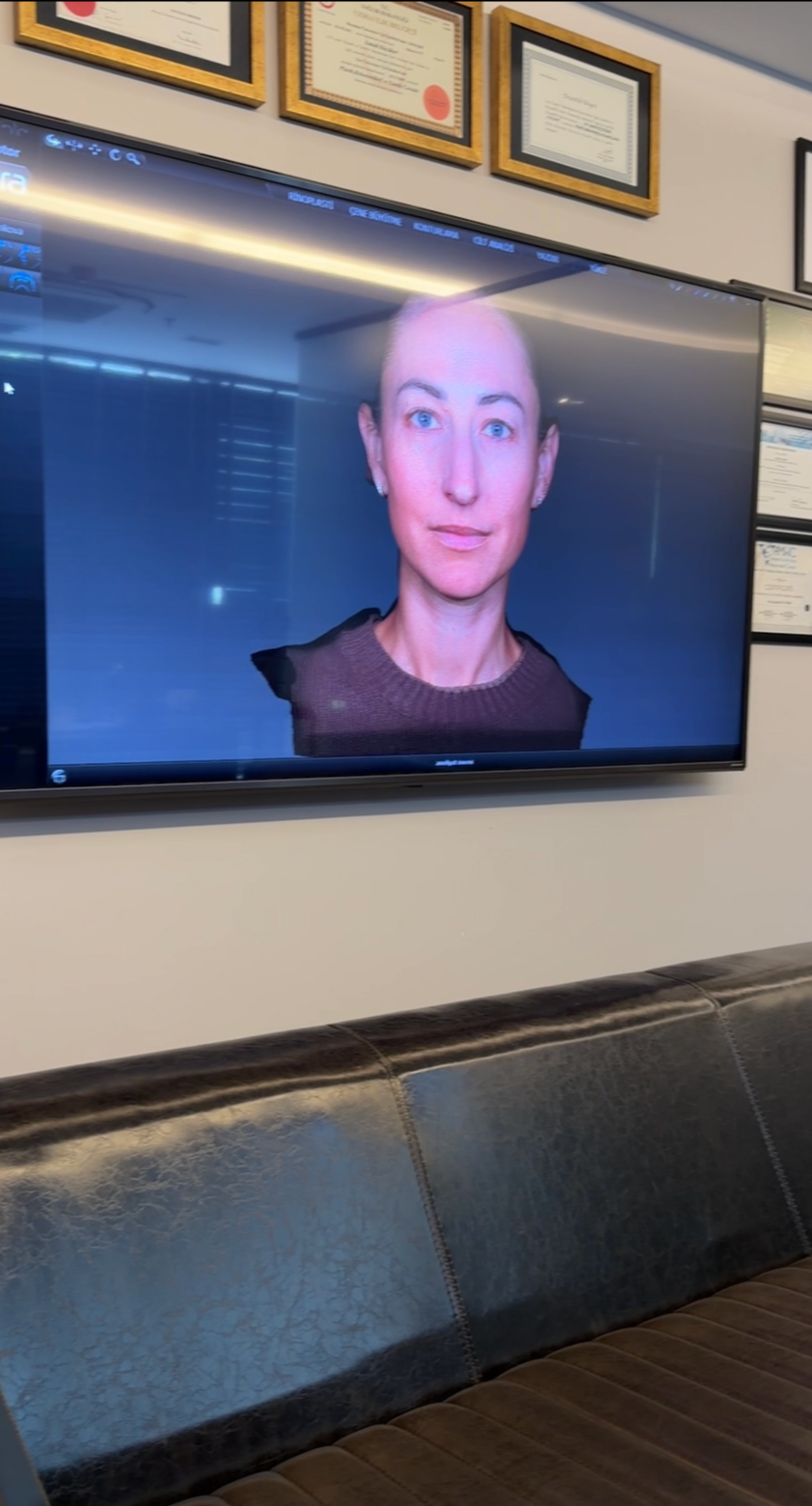
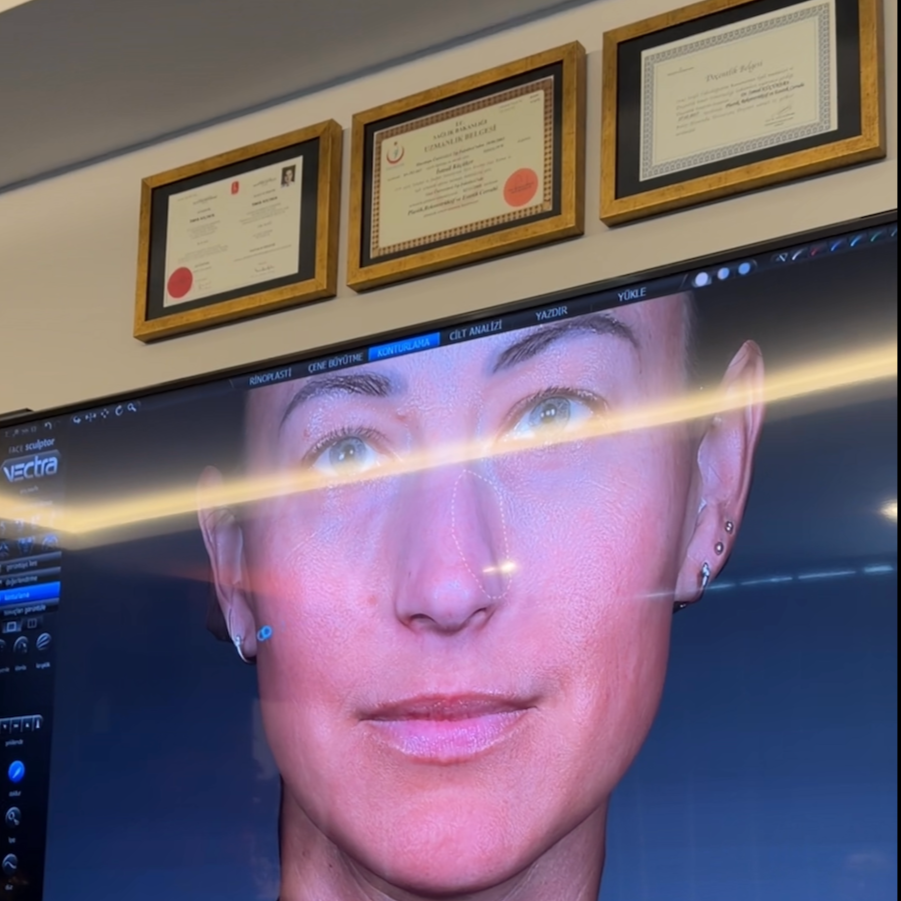
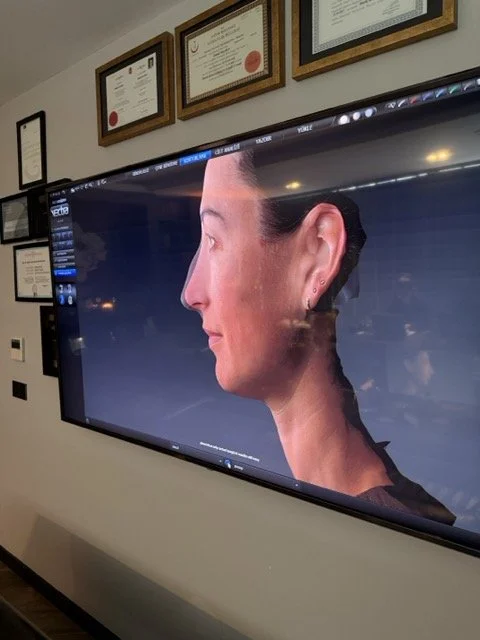
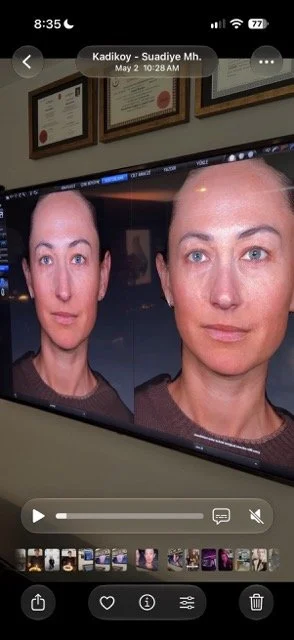
The day after flying in and two days before surgery, I had all of my pre-op appointments. A car picked us up early in the morning from our hotel and took us to the hospital where a liaison from my doctor's office met us. She stayed with us throughout the entire process and helped coordinate everything. I met with the anesthesiologist, had all my blood work done, and then the car took us to my doctor's actual office for the rest of my pre-op appointments. I met the team, filled out the necessary paperwork, had my photographs taken, and then it was time to sit down with my surgeon.
Walking into his office was an interesting experience because the first thing I saw was a giant image of my face on a screen! Seeing your face blown up like that can be a little confronting… but luckily I wasn't embarrassed or uncomfortable. If anything, I found it fascinating. I could almost look at myself like a scientist studying a subject rather than judging my own appearance. It was a completely different way of looking at my face and I actually enjoyed seeing the clinical side of the process.
Greg (my partner) was with me for the appointment and one of the coolest parts was watching my doctor use the technology to edit my nose on the screen in real time. He explained what he was doing and more importantly why he was doing it. It wasn't simply a matter of making my nose smaller or giving me a particular shape. He looked at the proportions of my face and how everything worked together to determine what would suit me best.
He showed us how he would remove the bump on my nose, make subtle adjustments to the shape, and lift the tip slightly. Seeing the proposed result and hearing the reasoning behind it was interesting. It felt very methodical and scientific, which I appreciated.
One thing I specifically asked for was to make my nose as thin as possible. His response was that he would do his best but he would never compromise my breathing to achieve a particular aesthetic result. There were anatomical limitations to how narrow he could make it while still preserving my nasal function and I really respected that. Green flag!
Interestingly, the nose he proposed was actually smaller and more feminine than what I had initially envisioned for myself. I had originally pictured a slightly stronger, more Roman-style nose. I didn't want anything too drastic and I thought I wanted to keep more of the character of my original nose. His recommendation was different from what I had walked into the appointment wanting.
I left feeling a little confused because the nose he had “designed” wasn't quite what I had imagined for myself. At the same time I was so impressed by his knowledge, his attention to detail, and the thousands of surgeries he had performed that I found myself genuinely considering his perspective. I sat with it and talked it through with Greg. The more I reflected on everything my doctor had explained the more comfortable I felt trusting his recommendation.
In the end, I decided to go with the nose he had proposed rather than the one I had initially pictured.
The most beautiful part of all of it is that I now have almost the exact same nose as my mom! My surgeon obviously had no idea but somehow the nose he designed for my face ended up making me look even more like my entire maternal side of the family. That's how I know it was all meant to work out the way it did. Here is the video I made showing how similar I look to my mom now.
My biggest takeaway from this appointment is that I would absolutely recommend going into your consultation with an idea of what you want but staying open to your surgeon's professional opinion. You know your own face, your preferences, and what you feel comfortable with. Your surgeon brings the anatomical knowledge and technical experience to help you understand what's realistically achievable. Ideally, those two perspectives work together.
And if your surgeon recommends something you genuinely don't like, speak up. Ask questions. Explain your concerns. You should never feel pressured to agree to a result that doesn't feel right to you. This is your nose, your face, and your decision at the end of the day. Being open to professional guidance doesn't mean giving up your voice in the process.
The entire consultation took around 30 minutes, which was relatively quick. But I had spent years researching rhinoplasty and thinking about what I wanted so I didn't have a huge list of questions. Whenever something else came up afterward I simply messaged his team, which made it easy to get clarification.
After my appointment, I also had a quick pre-op facial to help cleanse my skin and prepare it for surgery. It was a nice opportunity to relax for a little bit after a morning full of appointments and information. I also made my final payment so all the practical details were taken care of and everything was officially set for surgery.
Overall, I walked away feeling good about the plan and confident in the decision I had made. Of course, I had no idea exactly how everything would turn out but I felt like I was in good hands and was ready for surgery!
Greg and I had Sunday to explore Istanbul together and relax before the big day on Monday.
Day of Surgery
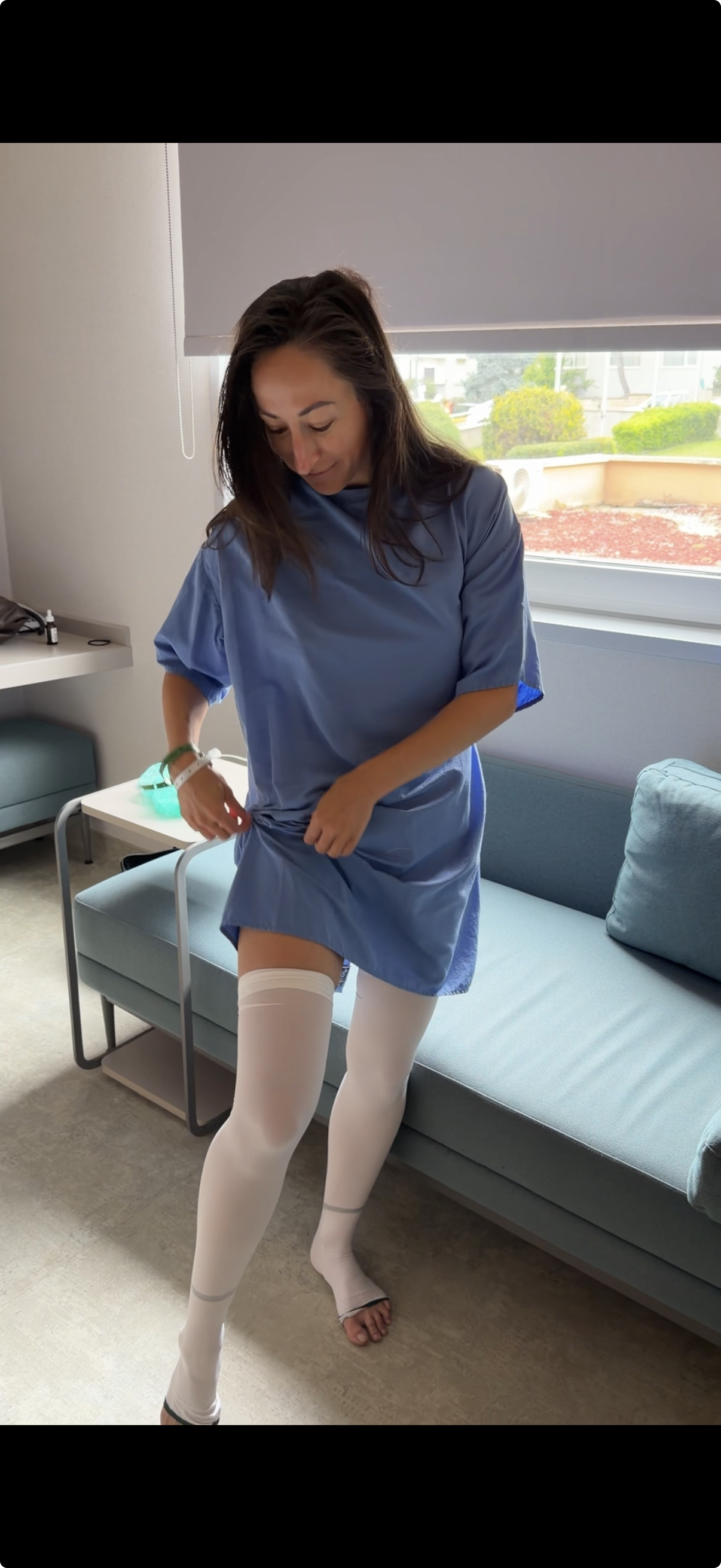
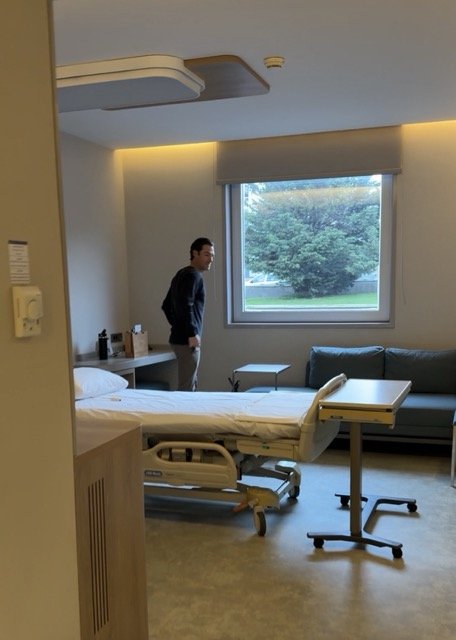
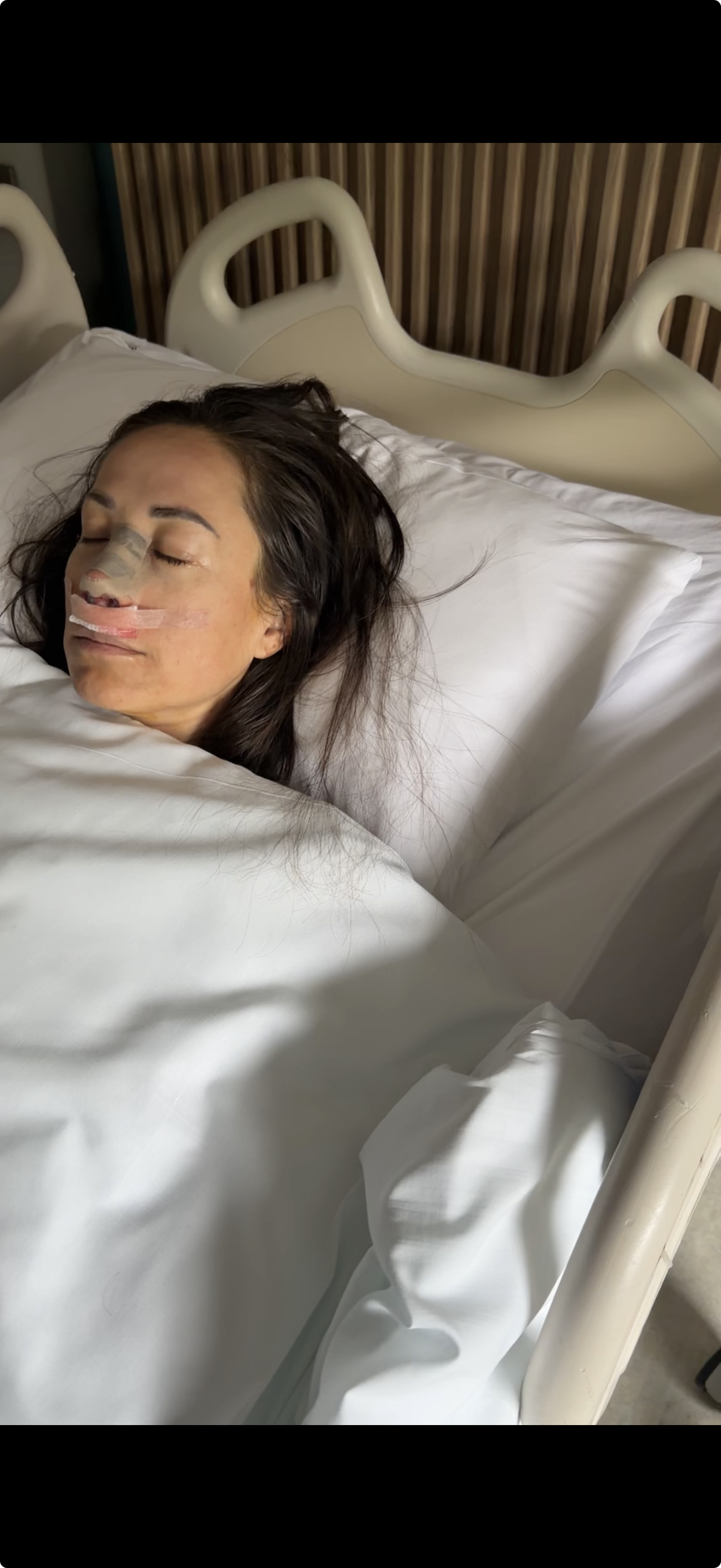
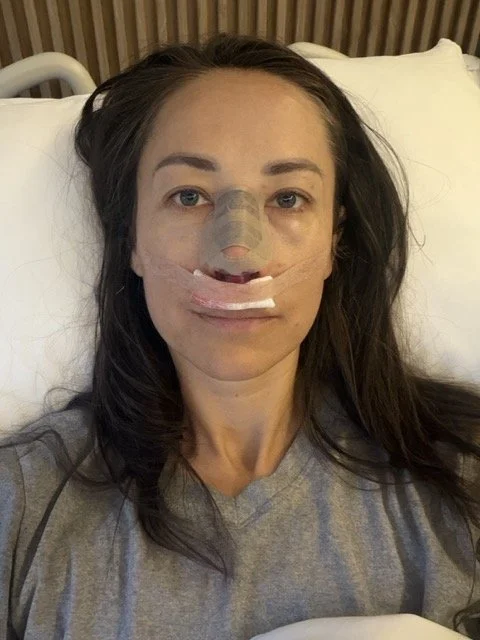
We were picked up around 6:00am and driven to the hospital for final preparations. After so many years of thinking about this day, it was strange to finally be there and know it was actually happening! I was a tiny bit nervous but also excited… and then I realized I had made a very dumb mistake.
Since my surgery was scheduled for the morning, I was instructed to stop eating and drinking at midnight. The instructions were very clear, but for some reason my tired brain didn't register that no liquids also meant no water. I was thinking of things like alcohol and coffee, so I drank water that morning without realizing my mistake.
Drinking water too close to surgery can be risky with anesthesia, so my surgery time had to be changed. My surgeon was operating on another patient that day and when that surgery ran longer than expected, I ended up waiting around the hospital for about five extra hours. It wasn't ideal at the time, but it actually turned into a blessing. Having so much time to sit and read my book helped me relax and settle my mind. By the time my surgery finally rolled around I wasn't nervous at all.
Thankfully, everything worked out, but please learn from my mistake and don’t drink water pre-surgery!
Luckily the hospitals in Istanbul are incredibly nice and we had a private room with our own bathroom to wait in. They even brought three meals for Greg (I could not eat since I was fasting). Please note that you have a liaison from the doctor’s office that is with you at the hospital, so she was in and out of my room taking care of us and making sure we were comfortable.
After surgery I shook uncontrollably for about 30 minutes from the anesthesia. It was intense and not something I was expecting, but apparently this is very common. The the operating room is cold and your body temperature drops during surgery, so the shaking is just your body working to warm itself back up.
After surgery, you have to wait an hour before you can drink water and two hours before you can eat. The hardest part of the entire surgery experience for me was not being able to drink water ha! I LOVE water, and after fasting beforehand and then waking up from anesthesia with the driest mouth imaginable, all I wanted was a tinyyyy sip. I kept asking Greg if I could drink yet, and that first hour felt like an eternity.
Water aside, the IV was probably my least favorite part of the whole experience (I fricken hated it). They put it in right before surgery and it stays in until you're almost ready to be discharged. You also have to wear compression socks during surgery which weren't the most comfortable. Other than that, the pain after surgery was surprisingly mild. I'd put it at about a 3/10.
One thing to know is that the nurses on the night shift did not speak English and the liaison from the doctor’s office obviously does not stay overnight. I got lucky because my night nurse spoke Russian, but you can communicate via Google Translate.
I originally planned to travel to Istanbul for surgery on my own, but Greg insisted on coming with me. I loved having him there both for the emotional support and for the little things he could help with, like closing the curtains and getting my eye mask. You're supposed to use an iced eye mask for 10 minutes every hour for the first couple of days, so having an extra set of hands to bring it to and from the freezer was really helpful. That said, if you're traveling on your own, you'll be totally fine too! The staff were incredibly helpful and friendly and you'll have support when you need it.
Looking back what surprised me most was how good I felt right after the surgery. My doctor assured me there would be no pain, but I was still bracing for a little discomfort. I slept pretty well that night despite having to sleep elevated and on my back (I’m normally a side sleeper) and I could even breathe through my nose which I wasn’t expecting. All in all I felt better than I anticipated, but of course everyone will have a different experience and every body will have a different reaction, so don’t panic if you feel congested.
If you want to see the whole day in detail I have a reel covering all of it that you can watch here.
A quick note on the surgical technique: After surgery I asked my doctor whether he had broken my nasal bones. He explained that he had used a piezo device to reshape them. Piezo technology uses ultrasonic vibrations to cut and sculpt bone with precision while helping preserve the surrounding soft tissue. It's used in certain rhinoplasties and can help reduce trauma to nearby tissues compared with some traditional techniques. Again, I felt almost no pain post surgery.
The First 5 Days Post Surgery
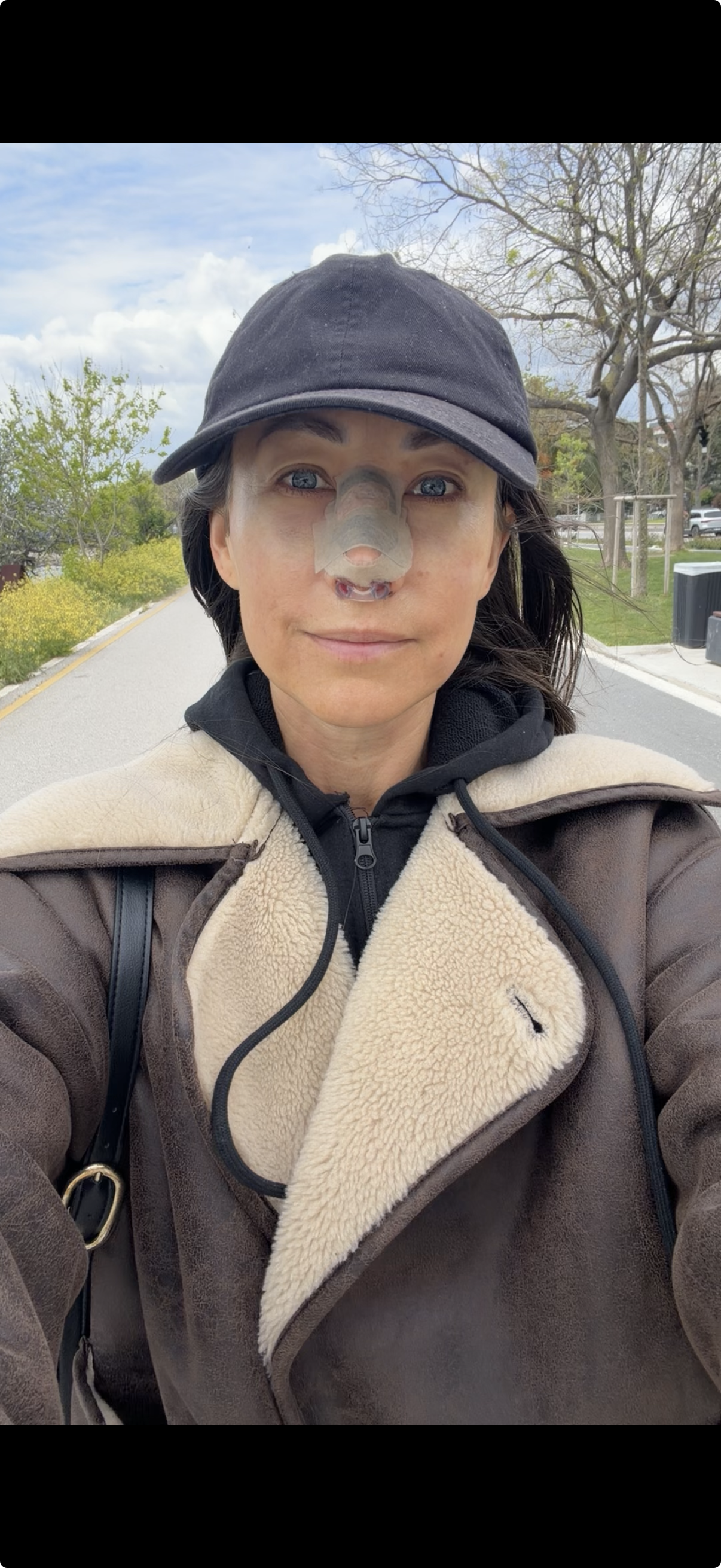
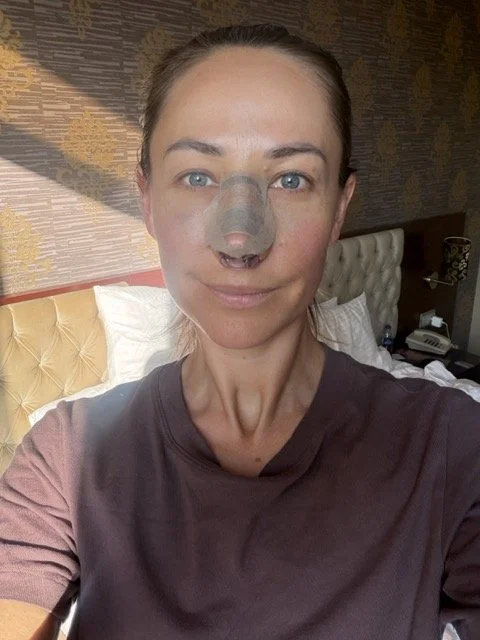
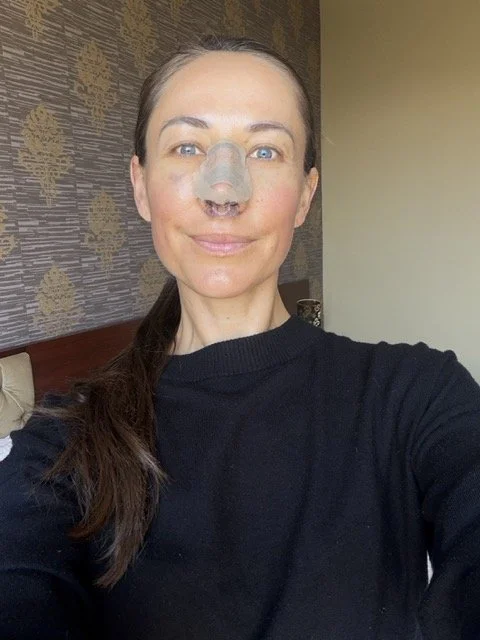
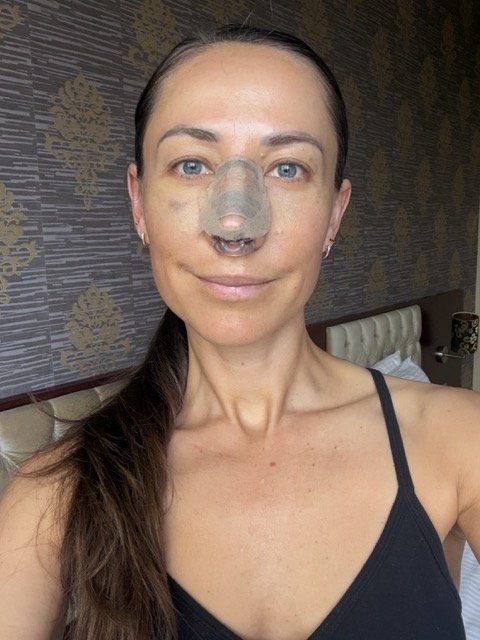
The first few days after surgery were pretty easy for me. You clean your nose about three times a day and use different nasal care products at specific times throughout the day. Before you leave the hospital, the liaison from the doctor’s office shows you how to use everything and sends you home with written instructions.
For pain relief, they give you something mild to take only if you need it. I can’t remember exactly what medication I was given, but I took it at night for the first three nights to help me sleep and that was it. The other important thing is to stay consistent with icing for the first couple of days. The doctor’s office gives you an eye mask for this and you ice for 10 minutes every hour.
I was able to go on a 3-mile (4.8 km) walk the day after surgery because my body was really craving a little movement and fresh air (if you stay at the recommended hotel in Istanbul, there’s a beautiful walking path right along the water). I ended up walking that much or more almost every day after surgery, but you have to make sure to walk slowly so that you don’t get your heart rate up.
Check with your doctor before you start walking to make sure it’s okay for you specifically.
Most importantly, listen to your body! I wanted to get out and move, but you might feel like doing absolutely nothing. If you’re tired, rest. There’s no need to push yourself if you don’t feel up to it. Sometimes the best thing you can do is stay in bed, relax, and give your body the time it needs to recover.
After surgery, my appetite was pretty much nonexistent and I partially lost my sense of taste, which is normal when you’re congested. The only thing I wanted were hydrating drinks like coconut and lemon water or electrolytes.
For my U.S. audience, these are my favorite electrolytes.
For my European audience, these are my favorite electrolytes. You can use code “StasiaNikova” for 15% off!
Fresh pineapple juice was another thing I loved having during recovery (fresh is key here, you don’t want the sugary concentrate from the store). Pineapple contains bromelain, an enzyme that has been studied for its potential to help reduce swelling and bruising.
Here’s a little snapshot of how I felt day by day.
Day 1 post op: I felt very good and was able to walk 3 miles (about 4.8 km) very slowly. I was insanely thirsty and dehydrated with a low appetite. I had no bruising and only slight swelling. The swelling made my skin look fantastic (it almost looked like I had filler).
Day 2 post-op: I felt very congested and dehydrated but had no pain. It felt like a really, really bad head cold. Days 2 and 3 were the hardest for me! I also went through waves of emotions. At one point, I started freaking out about the fact that I would be healing for the next few months and wouldn’t feel 100% for a while. But that feeling was soon replaced by pure joy when I saw the side profile of my nose. Just know that your emotions might go up and down throughout recovery, and that’s completely normal.
Day 3 post op: I felt much better and less congested. I started getting one tiny bruise on my cheek which I actually loved and made me feel like a badass. Overall, I had very little bruising and swelling.
Day 4 post op: I felt way way better. I drank coffee for the first time that day but it honestly tasted like dirt. I was still very dehydrated with a low appetite and all I wanted was coconut water and electrolytes.
You can see how I looked each day on the highlight reel titled “Rhinoplasty” on my Instagram.
Nose Reveal - 5 Days Post Op
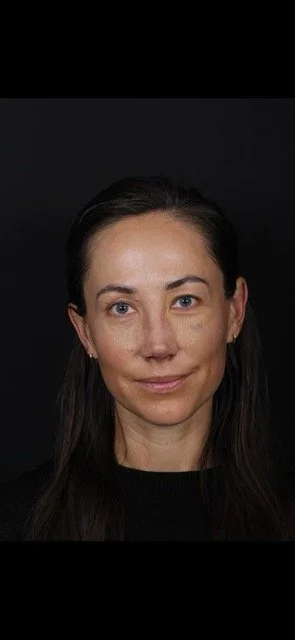
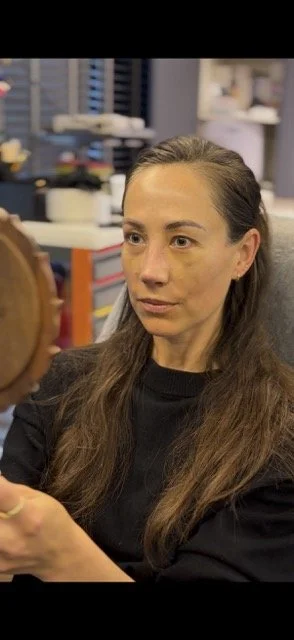
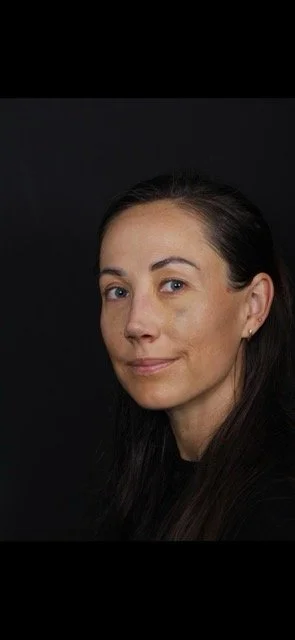
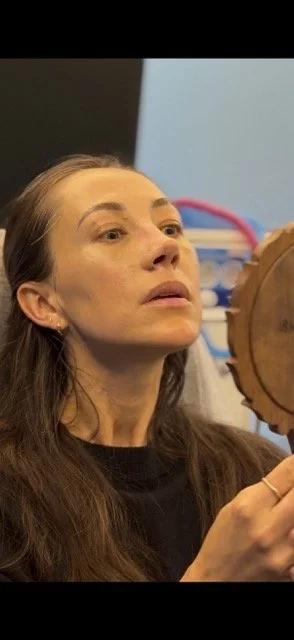
I genuinely think the hardest part of my entire rhinoplasty experience was seeing my nose for the first time after surgery.... which surprised me. You can see how emotional the reveal was in this video here.
Up until that point I felt like I had handled everything really well. The surgery went smoothly and my physical recovery was surprisingly easy in those first 5 days. Overall, I was having a really positive experience.
Day 5 post op was the big reveal! My nose had been taped up since surgery so this was the first time I got to see it uncovered. Everyone had warned me that seeing my nose for the first time would be a shock, but I honestly thought I’d be fine. I’m Russian and like to think I’m a pretty tough cookie so I really wasn’t expecting the emotional reaction I ended up having.
The nurses took me into a room to clean out my nose before the doctor came in to remove the tape. Everyone was so friendly and excited, and I was too! I had actually liked the way my nose looked with the tape on because it was straight and the hump was gone. I was expecting to see my nose for the first time and immediately fall in love with it.
Before removing the tape, the doctor explained that my tip was currently turned up and would drop over time. A quick note in case this happens to you too: the tip is taped up quite firmly after surgery and because the tissue is still so soft and swollen, it can look much more turned up initially than it will once everything settles. But don’t worry because the tip does drop!
Once the tape was off, the doctor handed me a mirror. I was so excited to finally see my nose, but the second I looked at myself it was like my brain completely shut off and the lights went out (you can actually see the disconnect in my eyes in the reveal video).
My nose looked SO small and feminine compared to what I was used to. The tip was turned way up and I felt like a Who from Whoville. On top of that, my nose looked really wide because of all the swelling. Before surgery, my nose was quite long which gave it the illusion of looking thin. Seeing it suddenly look so short and wide was a shock. I genuinely didn't recognize the person looking back at me… itt was nothing like what I had expected to feel when I finally saw my results.
What surprised me most was just how emotional I felt. I was sad and overwhelmed and there was something about it that almost felt like grief. I couldn't even explain what I was feeling in the moment. By the time I got back to my hotel room, I was SOBBING uncontrollably on the phone with Greg. I had no idea how to process the wave of raw emotions that had come up.
The Science Behind My Reaction
It wasn’t until a couple of months after surgery that I finally started to understand why seeing myself for the first time had affected me so deeply. I’m sharing this in case you’re considering facial surgery or have experienced something similar, because I really wish someone had explained it to me sooner.
I was listening to Dr. Cameron Chesnut on the Bossticks podcast when he explained that our brains have a specialized area for recognizing faces called the fusiform face area. Essentially, your brain has spent your entire life getting to know your face. It recognizes your features and how they all fit together, creating a familiar image of what you look like. But after rhinoplasty, your appearance can change almost overnight while your brain’s internal image of your face takes longer to catch up.
This isn’t just something that happens after surgery. Think about the last time you dyed your hair or saw your partner with a completely different haircut. Even a relatively small change can make you do a double take because it’s not what you’re used to seeing. Now imagine that feeling amplified when you make a much more drastic change to your own face.
So you look in the mirror and you know it’s you, but something feels off. You recognize the person looking back at you yet at the same time they don’t quite feel like you. It’s difficult to explain unless you’ve experienced it yourself. It’s incredibly unsettling.
I don’t think anything could have fully prepared me for that first moment when the tape came off, but I think understanding what was happening would have helped me feel less frightened by my own reaction. Instead of wondering why I felt so sad and disconnected from my reflection, I might have recognized that my brain simply needed time to adjust to a face that looked different from the one it had known for years.
The amazing thing is that our brains are incredibly adaptable! As you see your reflection every day that sense of familiarity will gradually return. For some people it may happen within days. For others it can take weeks or longer. Everyone’s experience is different and there’s no exact timeline or guarantee that the emotional side of recovery will feel the same for everyone.
Even in those first few days I could already see how much softer my face looked and how much more my eyes stood out. And with every passing day my reflection started to feel a little more like me. At the time of writing this, I’m 5 months post op and I truly can’t remember what I looked like before surgery!
I don’t think we talk enough about the emotional side of facial surgery. We spend so much time preparing for the physical recovery by researching surgeons, discussing swelling, and looking at before and after photos, but we’re not always prepared for the mental adjustment that comes with seeing a face we’ve known our entire lives suddenly look different.
If you’re considering facial surgery I hope this helps you feel a little more prepared. And if you’re in that phase right now please know that you’re not alone in what you’re feeling. You don’t have to love what you see immediately and you don’t have to rush yourself into feeling okay about it, but give your brain time to catch up. If those feelings don’t ease over time or start to feel heavy, please reach out to your surgeon or a mental health professional for support.
Days 5-12 Post Op
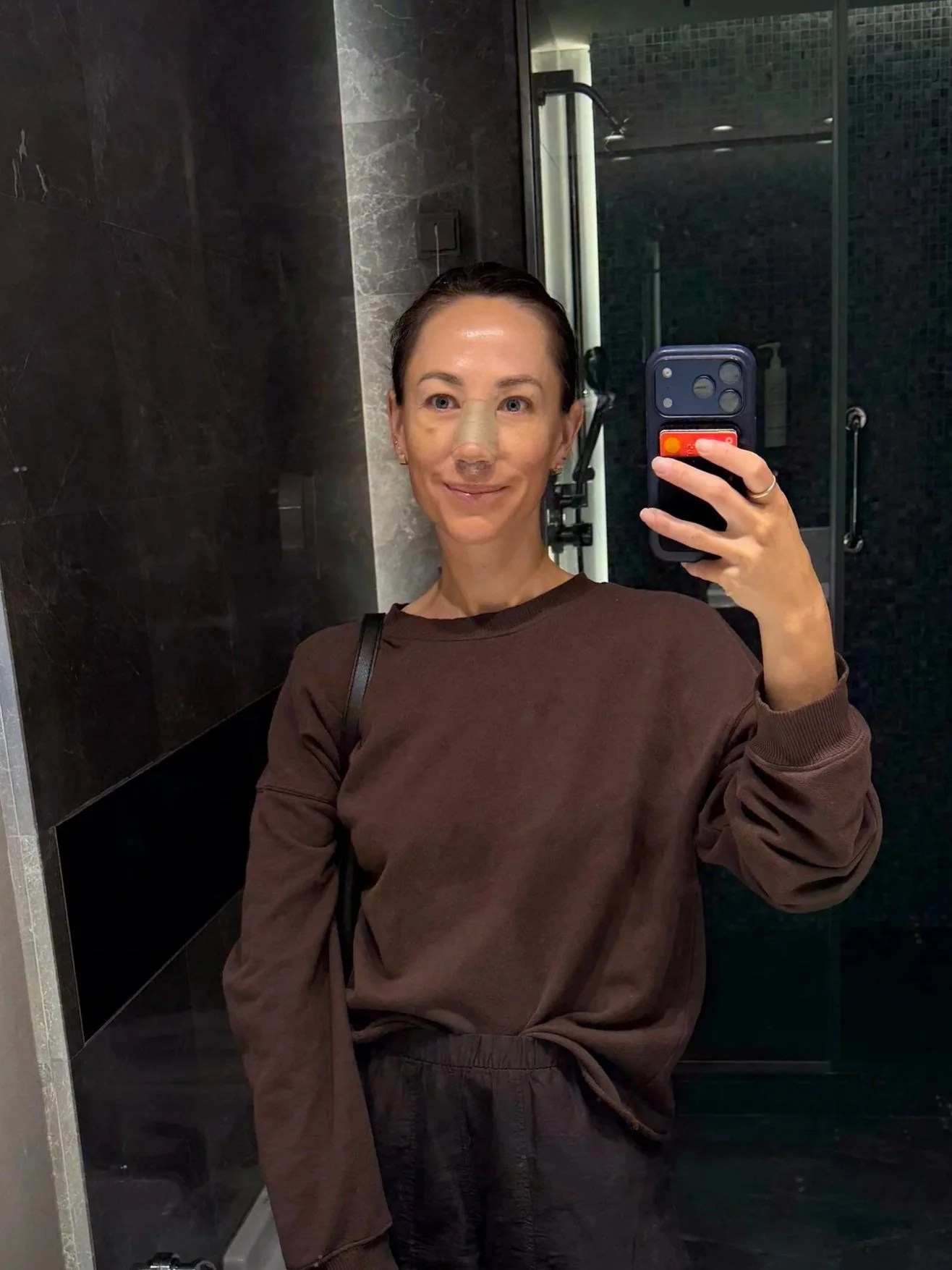
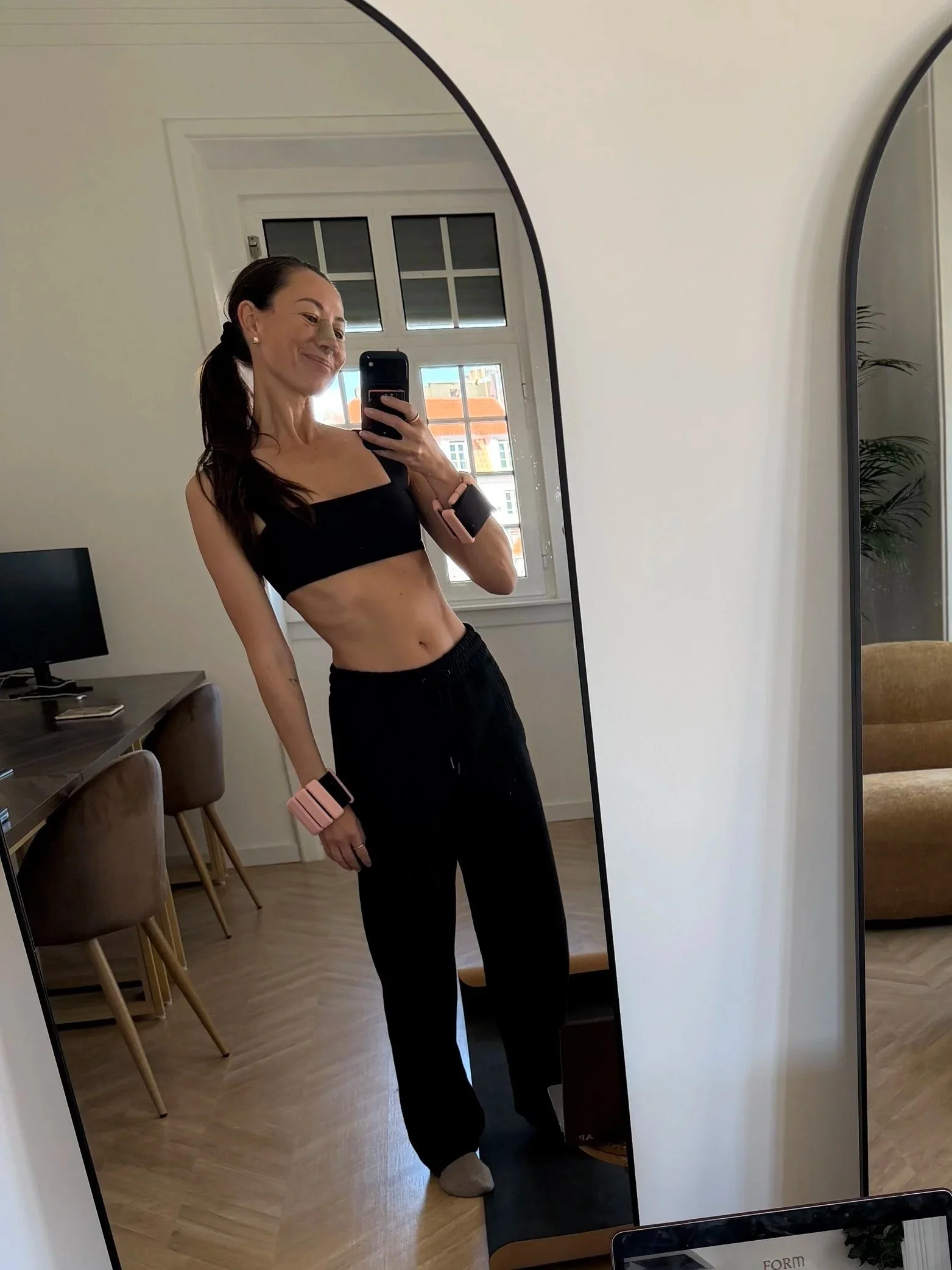
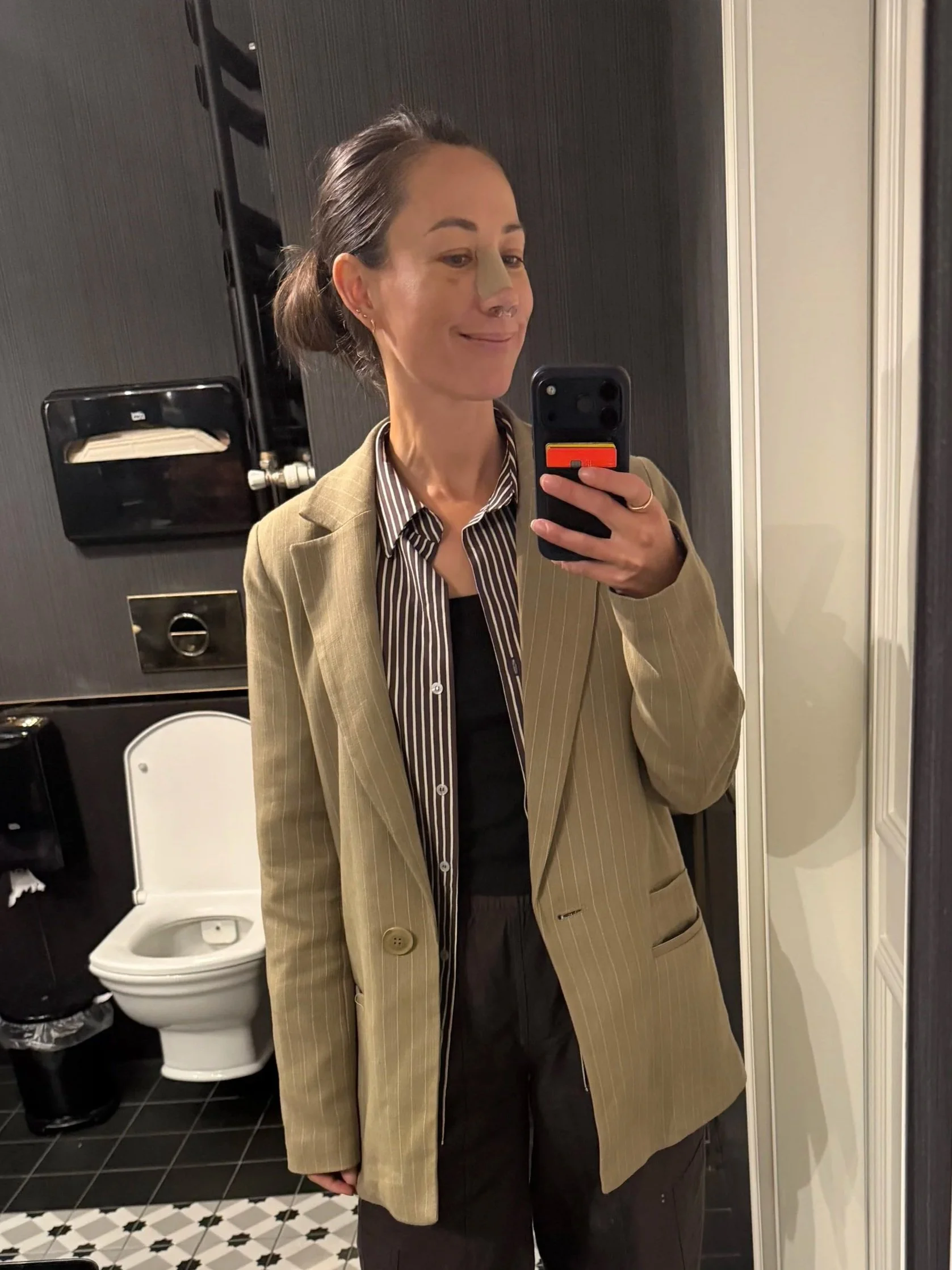
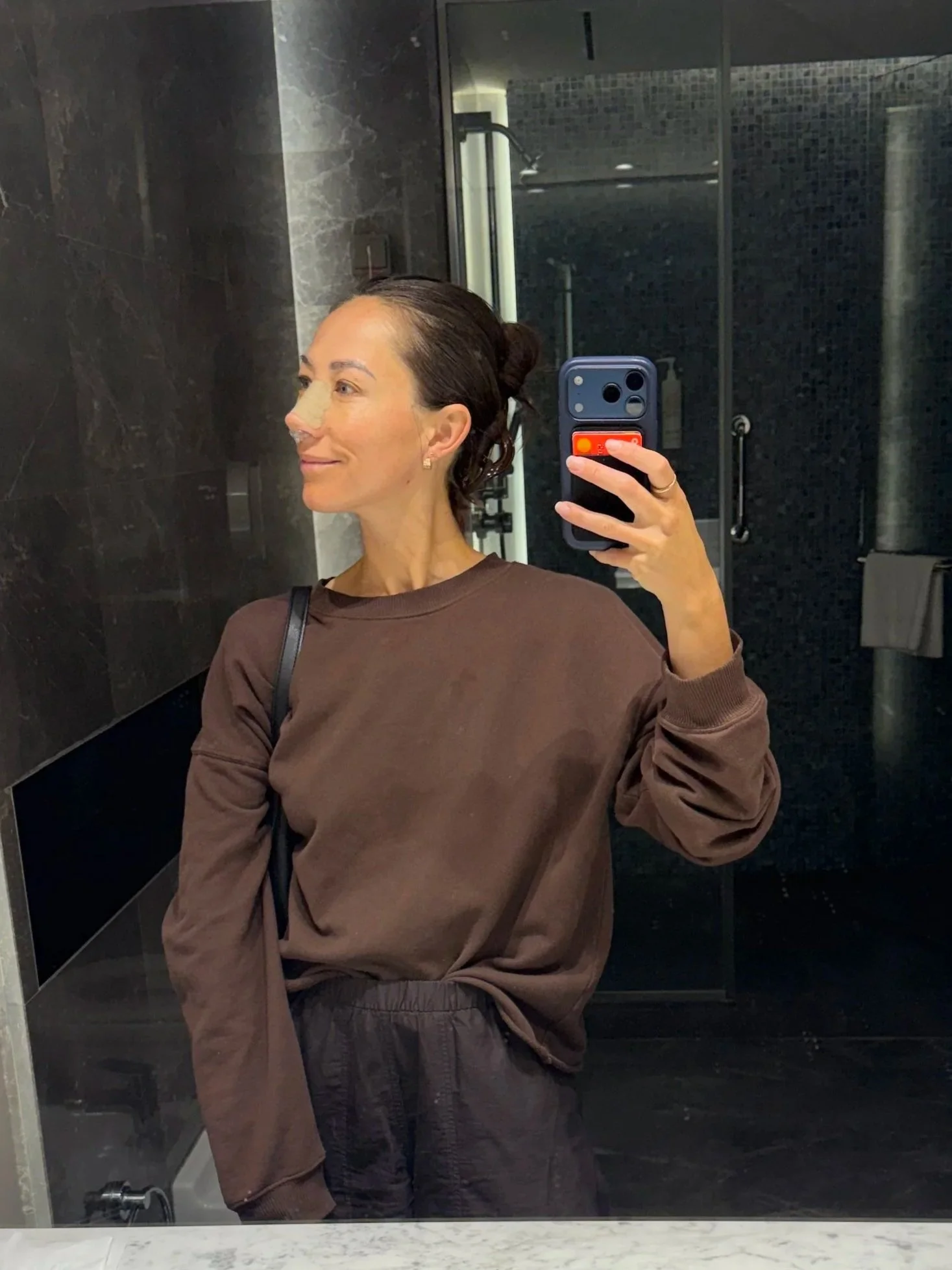
At my day 5 appointment, my doctor put fresh tape on my nose which I had to keep on for another week. I was also still wearing my silicone nasal retainer which I’d had in place since surgery (you can see me wearing it in the videos and photos I shared from this stage of recovery). I wore the retainer 24/7 for the first 12 days after surgery and then only at night for about two months.
A lot of you have also asked how long I had to tape my nose for. Based on my skin type and type of surgery, I only taped it for the first 12 days. However, please don’t use my timeline as a guide for your own recovery… every nose is different and you need to follow your surgeons instructions. Don’t listen to random people on the internet!
After wearing the fresh tape for another week, it was finally time to take it off for good! You can watch that reveal here. My nose was still VERY swollen, but this time I was mentally prepared for it.
You cannot judge your final result by how your nose looks in the early stages of recovery. If you’re still swollen at 12 days, THAT IS NORMAL. If you’re still swollen at two or three months, that is normal! Swelling can linger for up to a year as the tissues continue to heal and your nose gradually becomes more defined. Please be kind and patient with yourself.
One last thing to note is that my stitches were also starting to heal by this point and they looked ridiculous. The ends curled away from my nose and looked like tiny boogers. I felt a little self-conscious about them at first, but eventually I just embraced it. Remind yourself that it’s only temporary and try not to stress too much about how you look during recovery!
My Physical and Mental Healing Routine
I shared a video covering everything I was doing to support my physical and mental health after surgery. Many of these practices were already part of my everyday routine, but they felt especially important during the healing process.
Watch my Instagram video for all my recovery tips.
My recovery routine included probiotics to support my gut health after antibiotics, magnesium glycinate to support digestion and sleep, staying hydrated, and getting morning sunlight to help regulate my circadian rhythm. I also incorporated marine collagen, bone broth, and cinnamon into my diet and made fresh pineapple juice a regular part of my routine. Alongside these habits, I practiced daily self-massage and followed a gentle facial massage routine that my surgeon had specifically tailored to my recovery.
One important note: always check with your surgeon before taking or restarting any supplements after surgery. Some supplements, including garlic and high-dose vitamin E, can increase the risk of bleeding. Your surgeon may recommend waiting a week or two before restarting certain supplements, depending on your individual circumstances and any medications you're taking during recovery. Always follow their specific guidance.
Beyond the physical side of healing, I also made journaling and being mindful of how I spoke to myself a priority. Throughout the process, I started referring to my nose as “her” because I wanted to approach recovery with kindness rather than criticism. I know it might sound a little strange, but it genuinely helped me shift my perspective on the days when I felt frustrated looking in the mirror. Instead of focusing on what I wanted to change or getting impatient with how long healing was taking, I could remind myself that she was still healing and needed time. And when doubt crept in, I tried to meet those feelings with compassion and give myself the same patience and understanding I'd offer someone I love.
Returning to Movement After Surgery
I get asked a lot about when I was able to start working out again, and this was something I really had to be patient with during recovery. My doctor advised me to avoid strenuous exercise that would significantly raise my heart rate for the first two months. He did, however, clear me for gentle yoga and Pilates, so I started slowly with short workouts of just 10–20 minutes at around 12 days.
As a health coach, I found it challenging to step away from exercise because movement is such a big part of my everyday routine. I had to remind myself that my body was already working hard to heal and that recovery needed to come first. Sometimes the healthiest thing you can do is take a step back and give yourself permission to rest.
If your surgeon has cleared you for gentle movement and you're feeling up to it, you can gradually ease back in. But if you're tired, uncomfortable or simply don't feel like moving, don't force yourself. You don't need to be productive or maintain your usual routine while recovering from surgery. Give yourself permission to slow down and let your body heal.
Everyone's recovery is different, so use my experience as a reference rather than a timeline to follow. Always check with your own surgeon before returning to exercise and follow their guidance on which activities are safe for you.
If you're feeling overwhelmed by recovery or unsure when or how to start moving your body again, I offer personalized 1:1 coaching to support you through every stage of your surgery journey, from pre-op preparation to post-op recovery. Together, we can work on finding a balance between giving your body the time it needs to heal and gradually rebuilding a movement routine that feels good for you. I offer both 6-week and 3-month coaching containers depending on the level of support you're looking for.
If you'd like to learn more, feel free to email me or send me a DM on Instagram.
2 Weeks to 2 Months Post Op: The Hardest Part of Recovery (for me)
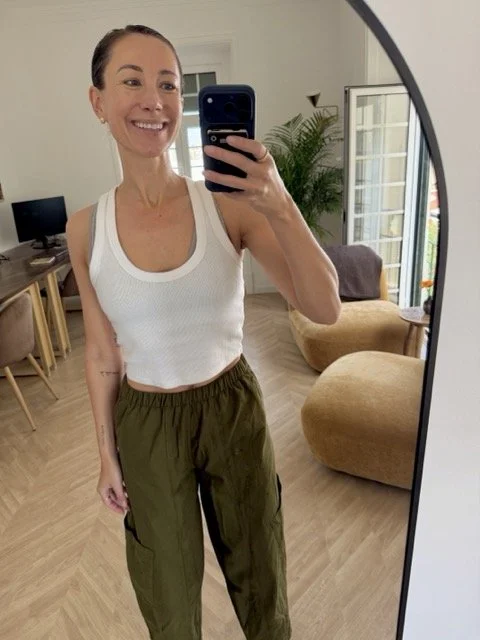
Looking back, the period between two weeks and two months post-op was by far the hardest part of my recovery (aside from the day of my nose reveal). I expected things to get easier as time went on, but I honestly struggled more than I anticipated during this phase.
Medication and side effects: I was prescribed a steroid after surgery and ended up taking it for just over two months. I personally found the side effects unpleasant. My skin and lips became extremely dry, I felt constantly dehydrated and sluggish, and I was unusually grumpy, irritable, and lethargic. I can't say how much of this was down to the medication versus recovering during a particularly hot European summer, but when I stopped taking the steroids around the two-month mark many of these symptoms improved. I suspect the medication played a significant role, but that's just my personal hunch.
Not being able to wear glasses or sunglasses: My surgeon advised me not to wear glasses for around two months while my nose healed because pressure on the bridge can affect recovery and leave marks in the soft tissue. I normally wear glasses when working on my computer, so going without them for two months definitely gave me headaches.
It was also June in Lisbon which meant incredibly bright, sunny days. I'm already sensitive to sunlight because of my light blue eyes and not being able to wear sunglasses made being outside during the day really difficult.
Luckily, my surgeon allowed me to wear extremely lightweight sunglasses for very short periods, so I bought a few cheap pairs and wore them for a minute or two when the sun was particularly intense. You might see me wearing them in my videos, but don't be fooled.... I wasn't wearing them for long!
I'd recommend investing in a wide-brimmed hat to help protect your face from the sun while you're unable to wear sunglasses comfortably.
The heat and crowds made everything harder: Without air conditioning at home, there was nowhere to escape the summer heat. I felt more swollen and physically uncomfortable and Lisbon's crowds in June made me want to isolate rather than be around people. Between everything my body was dealing with and the constant stimulation of summer, I felt on edge. If I could do it again, I would have opted to have surgery in the winter.
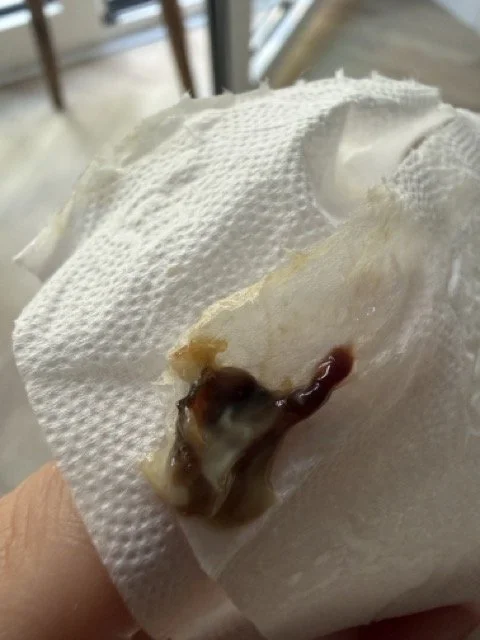
Crusting and mucus: Around the one-month mark, I started having some enormous crusts and clumps of mucus come out of my nose. It looks gross, but the relief when they finally came out was REAL! I've included photos below so you know what this can look like. Crusting and mucus can be part of healing after nasal surgery. However, heavy bleeding, worsening pain, fever or foul-smelling discharge aren't symptoms to ignore and should be checked with your doctor.
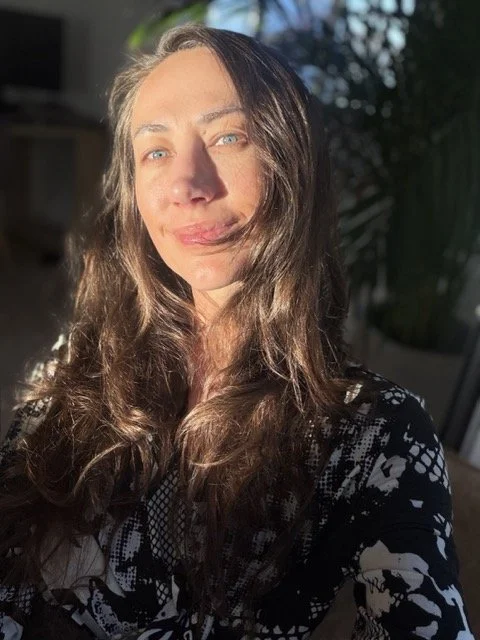
Photos from my recovery: Here are photos from Day 19, Day 23 and 6 weeks post-op. You can see the swelling gradually going down, although I still had a long way to go. Here are photos of the clumps of mucus.
For me, two months was a major turning point. This was when I could start getting back to more of my normal routine. I could gradually return to activities like swimming and exercise and start wearing glasses again. I was also coming off my steroid medication around this time and started feeling SO MUCH BETTER. Everyday life finally started feeling a lot more normal again.
2 Months to 5 Months Post Op: Slow and Steady
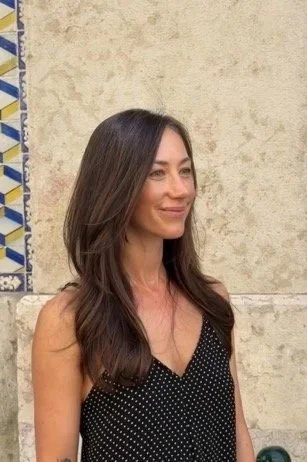
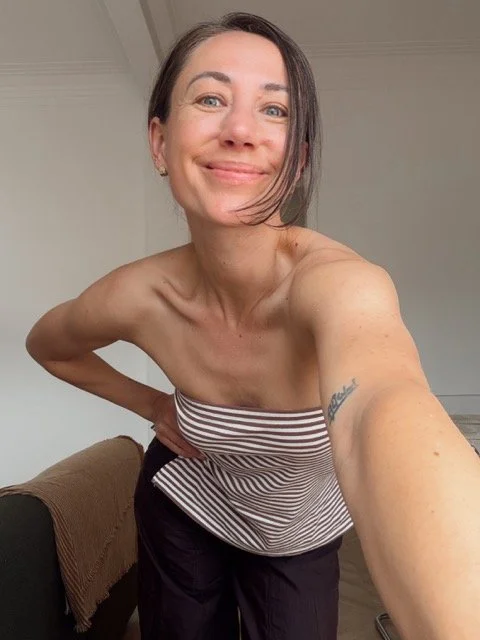
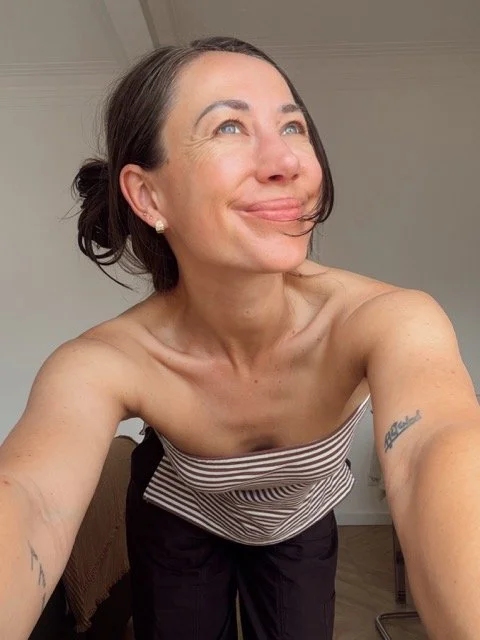
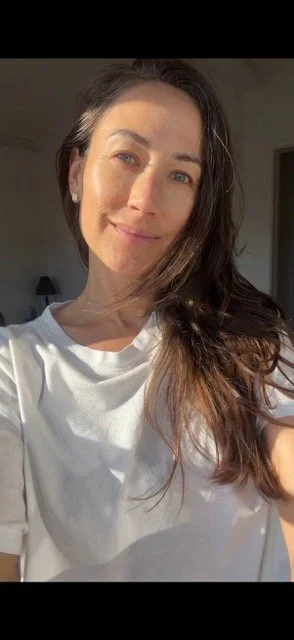
There's honestly not a huge amount to report here. My swelling has continued to go down….very slowly, but it is going down. Remember that it can take a year or longer for swelling to fully settle so try not to judge your final results too early.
Be patient with yourself and your body. Recovery isn't always linear, and every nose, surgery, and healing journey is different. If you're ever unsure whether something is normal, check with your surgeon rather than relying on comparisons with other people's experiences online. You can see my results at 3 months post op, 3.5 months post op, and 5 months post op.
What Happened to My Nasal Drip?
As a reminder, one of the biggest reasons I finally went ahead with rhinoplasty after 19 years of considering it was my nasal drip, which became almost uncontrollable after moving to Salt Lake City.
During surgery, my surgeon corrected my deviated septum, used radiofrequency to reduce my turbinates (structures inside the nose that help warm and humidify the air) and placed spreader grafts to support my nasal valves and improve airflow.
My nose was still runny during the healing process, but now, at five months post-op, my nasal drip has improved by around 90%.
According to my surgeon, correcting my deviated septum and reducing my turbinates were likely the main reasons for this improvement. I still experience some dripping in very cold weather or during vigorous exercise, but it's nothing like it was before. Being able to go about my day without constantly worrying about my nose dripping has made a huge difference to my quality of life!
This is my personal experience and everyone's anatomy and surgical needs are different, but I wanted to share what was done in my case because I know so many of you have asked. If you're experiencing something similar, it's worth speaking with a specialist to understand what options are available for you.
Final Thoughts
Looking back on the whole journey, I can honestly say that rhinoplasty was about so much more than changing my nose. It brought up emotions I didn't expect, challenged the way I saw myself, and taught me a lot about grace and patience. There were moments of doubt, sadness, frustration, grief, and pure joy.
I have absolutely no regrets about my decision. At the same time, I know surgery isn't right for everyone, and I don't believe anyone should feel pressured to change their appearance. What matters is taking the time to understand your reasons and making a choice that feels right for you, without letting shame or other people's opinions make that decision for you.
If you're considering rhinoplasty, I hope this guide has helped you feel more informed and prepared for both the physical and emotional sides of the experience. And if you're already recovering, please give yourself grace. You don't have to love your results immediately or feel a certain way by a certain point. Healing takes time, and so does adjusting to a face you've known your entire life.
Thank you to everyone who has followed along, shared your stories ,and trusted me with your own experiences. Your messages have reminded me how many of us are navigating these questions quietly, and how much it can mean to know you're not alone!
If you're preparing for surgery or navigating recovery, I'd be truly honored to support you through the physical, mental, and emotional sides of your journey through 1:1 coaching. If you'd like to learn more, feel free to email me or send me a DM on Instagram.